The history of slavery is one of the most significant and painful chapters in human civilization. For centuries, millions of African men, women, and children were forcibly taken from their homes, transported across the Atlantic Ocean, and subjected to exploitation and oppression. The transatlantic slave trade affected generations of people and left lasting consequences for communities across Africa, Europe, the Caribbean, and the Americas.
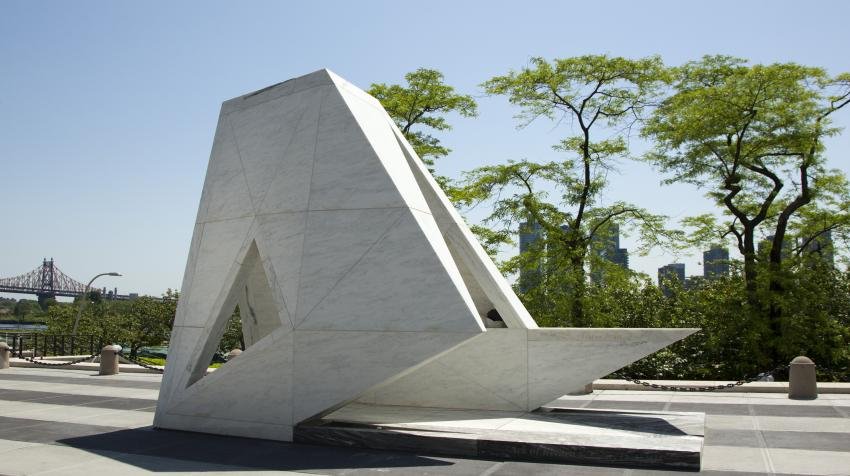
To recognize these experiences and preserve their memory, the United Nations established a permanent memorial at its headquarters in New York. Known as the Ark of Return, this monument honours the victims of slavery and the transatlantic slave trade while encouraging people to reflect on the continuing impact of historical injustice.
Unveiled on March 25, 2015, the Ark of Return is more than an architectural structure. It represents remembrance, recognition, education, and hope. Its design encourages visitors to acknowledge the tragedy of slavery, consider its legacy, and remember the millions of people whose lives were affected.
Understanding the history and meaning of the UN Ark of Return Memorial helps explain why historical remembrance remains essential to promoting human dignity, equality, and freedom.
What Is the UN Ark of Return Memorial?
The Ark of Return is the permanent memorial at United Nations Headquarters in New York dedicated to honouring the victims of slavery and the transatlantic slave trade.
It was created to provide a place where visitors, diplomats, students, researchers, and members of the public could remember the people affected by one of history’s largest systems of forced migration and human exploitation.
The memorial focuses on three central ideas:
- Acknowledging the tragedy of the transatlantic slave trade.
- Considering the lasting consequences of slavery.
- Remembering the victims and learning lessons that can help prevent injustice.
The monument also recognizes the courage of enslaved people who resisted oppression, as well as abolitionists and other individuals who challenged the slave trade.
According to the United Nations, the memorial was designed to encourage reflection on the history of slavery and raise awareness about racism, prejudice, and the continuing consequences of exploitation. <Cite refs={[“turn604810search2″,”turn604810search0”]}/>
The History Behind the Ark of Return
Why the United Nations Created the Memorial
The idea of establishing a permanent memorial developed through international efforts to recognize the victims of slavery and the transatlantic slave trade.
In 2007, the United Nations General Assembly adopted Resolution 62/122, supporting the creation of a permanent memorial at United Nations Headquarters. The initiative aimed to honour the victims and encourage reflection on the historical and modern-day consequences of slavery.
The project also recognized the importance of international education and remembrance. Slavery was not simply a historical economic system; it involved the systematic denial of freedom, family separation, violence, and the exploitation of millions of people.
A permanent memorial would provide a visible reminder of these experiences and encourage future generations to understand their significance. <Cite refs={[“turn604810search0″,”turn604810search2”]}/>
The International Design Competition
In 2011, the United Nations and UNESCO supported an international design competition to select a suitable concept for the memorial.
The competition attracted 310 entries from 83 countries. Architects and designers were invited to develop a monument that would communicate the tragedy of slavery while creating a meaningful place for education and reflection.
The winning design was submitted by Rodney Leon, a Haitian-American architect. His proposal, titled The Ark of Return, was selected because it connected historical remembrance with powerful architectural symbolism.
The design was formally presented in September 2013, and construction followed the selection process. <Cite refs={[“turn604810search2″,”turn604810search13”]}/>
The Unveiling on March 25, 2015
The Ark of Return was officially unveiled on March 25, 2015, at the United Nations Visitors Plaza in New York.
The date was especially meaningful because March 25 is observed internationally as the International Day of Remembrance of the Victims of Slavery and the Transatlantic Slave Trade.
The unveiling brought together United Nations representatives, international officials, diplomats, and people involved in the memorial project.
The event marked an important step in recognizing the victims of slavery through a permanent monument at the headquarters of an international organization committed to human rights and dignity. <Cite refs={[“turn604810search4″,”turn604810search14”]}/>
Who Designed the Ark of Return?
The Ark of Return was designed by Rodney Leon, an American architect of Haitian descent.
His background and the history of Haiti provide important context for the memorial. Haiti emerged from a successful revolution against slavery and colonial rule, becoming independent in 1804. Its history is closely connected to the wider struggle for freedom and the rights of formerly enslaved people.
Leon approached the project as more than a traditional monument. His design was intended to create a space for acknowledgement, education, reflection, and healing.
The architectural concept invites visitors to move through the memorial and experience three connected elements. Each section communicates a different aspect of the history and legacy of slavery.
Leon has described the Ark as a symbolic vessel that offers a counter-narrative to the forced journeys experienced by enslaved Africans. <Cite refs={[“turn604810search3″,”turn604810search5”]}/>
The Three Main Elements of the Ark of Return
The memorial is organized around three important themes: Acknowledge the Tragedy, Consider the Legacy, and Lest We Forget. Together, they guide visitors through a journey of historical understanding and reflection.
1. Acknowledge the Tragedy
The first section focuses on recognizing the scale and human consequences of the transatlantic slave trade.
It includes a three-dimensional map showing the triangular routes connecting Africa, Europe, and the Americas. The map places Africa at the centre and illustrates the geographical reach of the forced transportation of enslaved people.
The design reminds visitors that slavery was not an isolated event affecting one location. It was an international system involving multiple continents, trading networks, colonial powers, and commercial interests.
This section encourages people to acknowledge the suffering of those who were captured, separated from their families, and transported against their will.
It also helps visitors understand the scale of the historical tragedy and the importance of preserving accurate records of the past.
2. Consider the Legacy
The second element focuses on the human experience of slavery and its lasting consequences.
It features a life-size human figure lying within a marble alcove, opposite a wall containing images representing the interior of a slave ship.
The figure symbolizes the millions of men, women, and children who experienced forced transportation across the Atlantic. The surrounding imagery recalls the dangerous and overcrowded conditions endured during the Middle Passage.
This part of the memorial encourages visitors to look beyond trade routes and economic statistics and consider the individual human lives affected by slavery.
It also raises questions about the consequences that continued after emancipation, including racism, discrimination, economic inequality, and the disruption of cultural and family connections.
3. Lest We Forget
The third element, titled Lest We Forget, features a triangular reflecting pool.
Water creates a peaceful setting for remembrance and contemplation. Visitors are invited to pause and reflect on the people who suffered and died during the transatlantic slave trade.
The reflecting pool also represents the importance of remembering the past while considering the future.
Its message is simple but powerful: historical suffering should not be ignored or forgotten. Remembering those who experienced slavery can encourage greater respect for freedom, equality, and human dignity.
These three elements work together to create a meaningful experience that connects historical recognition with education and reflection. <Cite refs={[“turn604810search0″,”turn604810search3″,”turn604810search5”]}/>
What Does the Name Ark of Return Mean?
The name Ark of Return carries deep historical and symbolic meaning.
It is partly understood as a response to the idea of the Door of No Return, a name associated with coastal locations in West Africa from which enslaved Africans were forcibly transported across the Atlantic.
For many enslaved people, the journey across the ocean meant permanent separation from their homes, families, communities, and cultural roots.
The Ark of Return offers a symbolic alternative to that experience. Rather than representing forced departure, it represents a spiritual and emotional journey of remembrance and return.
The monument does not physically reverse the history of slavery. Instead, it creates a space where the memory and dignity of those who suffered can be acknowledged.
Its message is especially meaningful for descendants of enslaved Africans and communities seeking to preserve their ancestral histories.
The name also reflects a broader human aspiration: to restore recognition, dignity, and respect to people whose identities and freedom were denied. <Cite refs={[“turn604810search1″,”turn604810search5”]}/>
The Connection Between the Memorial and the Transatlantic Slave Trade
The Ark of Return is directly connected to the history of the transatlantic slave trade, which forcibly transported millions of Africans to the Americas and the Caribbean over several centuries.
The trade expanded alongside European colonialism and plantation agriculture. Enslaved Africans were forced to work in industries producing sugar, cotton, tobacco, coffee, and other commodities.
The Middle Passage was among the most brutal parts of this system. People were confined aboard ships under dangerous conditions, with many experiencing disease, hunger, violence, and death.
The consequences extended beyond the voyage itself. Enslaved people faced forced labour, family separation, restrictions on personal freedom, and discrimination across generations.
The Ark of Return makes this history visible through its map, symbolic ship imagery, and human figure.
By presenting the history in an architectural form, the memorial helps visitors connect historical facts with the experiences of the people who endured them.
Why the Ark of Return Is Important Today
Preserving Historical Memory
Historical events can become less familiar as generations pass. Memorials help preserve important stories and provide a lasting connection between the past and present.
The Ark of Return ensures that the history of slavery remains part of international public remembrance.
It encourages people to explore the experiences of enslaved Africans, recognize their resistance, and understand the wider consequences of forced migration and exploitation.
Educating Future Generations
Education is one of the most important purposes of the memorial.
Students, teachers, researchers, and visitors can use it as a starting point for learning about the transatlantic slave trade, colonial history, abolition movements, and the development of modern human rights.
The memorial also encourages people to examine how historical systems of exploitation influenced present-day societies.
Promoting Human Rights and Equality
The Ark of Return is located at the United Nations, an institution whose work includes promoting international cooperation, peace, and human rights.
Its message is relevant to ongoing discussions about racism, discrimination, forced labour, and human trafficking.
Remembering the victims of historical slavery can help people recognize the importance of protecting freedom and dignity in contemporary society.
Honouring Victims and Recognizing Resistance
The memorial recognizes not only those who suffered and died but also the people who resisted slavery.
Enslaved individuals fought for freedom through escape, cultural preservation, rebellions, and everyday acts of resistance. Abolitionists and other campaigners also challenged systems of exploitation.
Their actions form an important part of the history represented by the Ark of Return.
The Ark of Return and the International Day of Remembrance
March 25 is observed each year as the International Day of Remembrance of the Victims of Slavery and the Transatlantic Slave Trade.
The United Nations established this observance to honour the people who suffered under slavery and increase awareness of the trade’s historical consequences.
The day also encourages education about racism and prejudice and recognizes the contributions of people of African descent.
The Ark of Return provides a permanent place connected to this annual observance. Its unveiling on March 25, 2015, strengthened the relationship between international remembrance and the physical preservation of historical memory.
Schools, museums, cultural organizations, and communities can use the occasion to organize discussions, exhibitions, educational programmes, and remembrance activities.
More information is available through the United Nations International Day of Remembrance.
Where Is the UN Ark of Return Memorial Located?
The Ark of Return is located on the Visitors Plaza at United Nations Headquarters in New York City.
Its position near the United Nations General Assembly Building gives it an important place within the international organization’s public grounds.
The location is significant because the memorial’s message relates to the principles of human dignity, equality, freedom, and international cooperation.
People interested in visiting should consult the official United Nations visitor information before travelling. Access arrangements, visitor procedures, and security requirements may change, so checking current guidance is recommended.
The memorial can also be explored through official United Nations photographs, educational materials, and information about its design.
Conclusion: Remembering the Past Through the Ark of Return
The UN Ark of Return Memorial is an important symbol of remembrance, recognition, and hope. Created to honour the victims of slavery and the transatlantic slave trade, it provides a permanent place for people to reflect on one of the most devastating chapters in human history.
Designed by Rodney Leon and unveiled on March 25, 2015, the memorial communicates its message through three elements: Acknowledge the Tragedy, Consider the Legacy, and Lest We Forget.
Its design encourages visitors to understand the global scale of slavery, recognize the suffering of enslaved people, and consider the consequences that continue to affect societies.
Most importantly, the Ark of Return reminds us that remembering history is essential to building a more informed and respectful world. By preserving the stories of those who suffered and recognizing the courage of those who resisted, future generations can better understand the importance of freedom, equality, and human dignity