
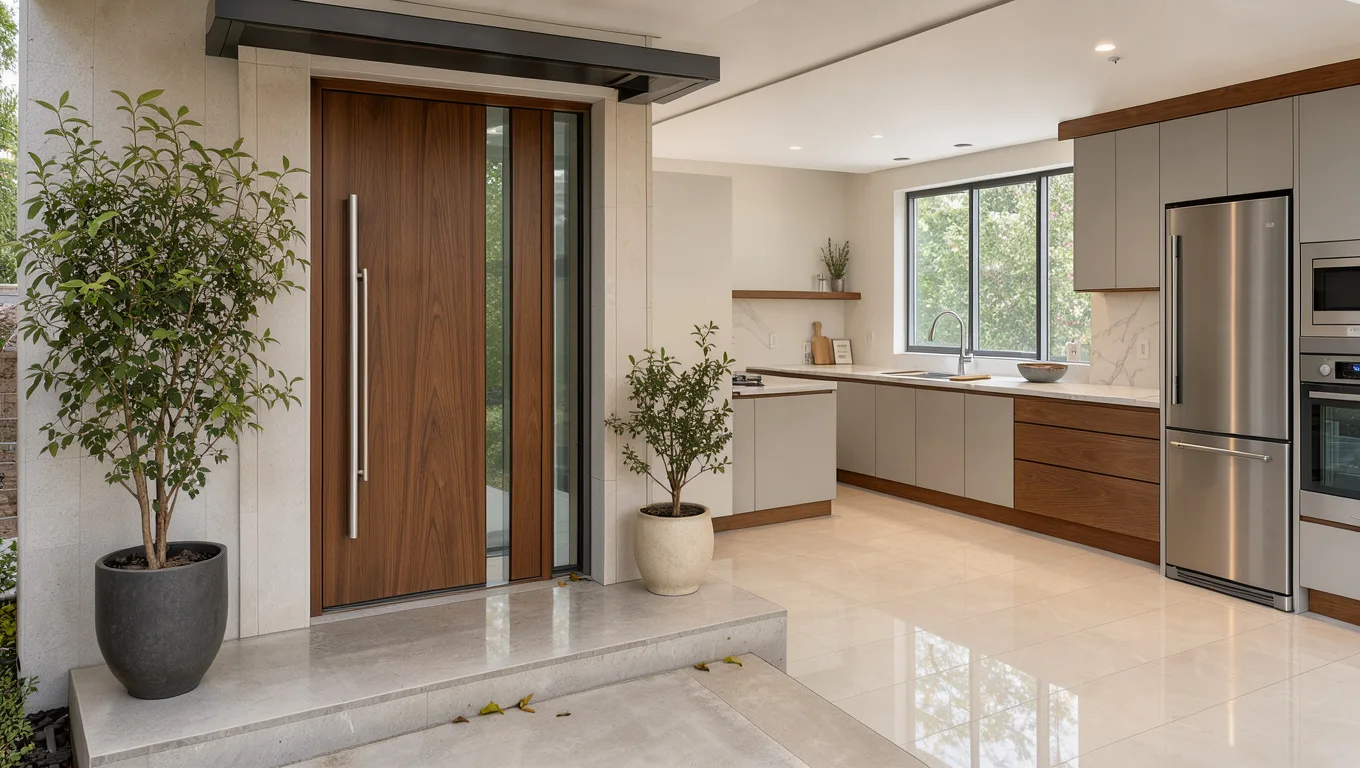
Exterior replacements, especially door upgrades, and a restrained kitchen refresh are clear resale-first starting points. Repairs and local buyer preferences should shape your final choice. These home improvements to increase property value can attract buyers, but no project guarantees a profit. Cost recouped means the estimated resale value of a project divided by its job cost, expressed as a percentage. The right investment also depends on how you use your home each day.
National estimates can help you compare projects, but your home’s condition and local demand matter more than a ranking alone. A working kitchen may need only small updates, while worn or damaged parts of the house may need prompt repair. You can also choose an upgrade for comfort, even when its resale estimate falls short of its cost.
This article lays out common project costs and estimated resale recovery, then considers household needs and local buyer preferences. The estimates describe possible value at sale, not guaranteed profit or a promise about your home. Before comparing finishes, decide whether your priority is a near-term sale, daily comfort or a needed repair.
Which Home Improvements to Increase Property Value Deliver the Best Returns?
Garage door replacement leads the 2025 national figures, followed by steel entry doors and manufactured stone veneer. These three exterior projects had the strongest cost recouped among the choices listed below. The 2025 Cost vs. Value Report compares average costs and resale values for 28 remodeling projects across 119 U.S. markets.
Here are the national averages for the three leading projects. The estimated value at sale can exceed the job cost, but that does not guarantee profit. Your actual result depends on the home and the sale.
- Garage door replacement: $4,672 job cost, $12,507 value at sale, and 267.7% cost recouped.
- Steel entry door replacement: $2,435 job cost, $5,270 value at sale, and 216.4% cost recouped.
- Manufactured stone veneer: $11,702 job cost, $24,328 value at sale, and 207.9% cost recouped.
Eight of the report’s 10 highest-ranking projects were exterior replacements. A minor kitchen remodel was the only interior project in the top five. That pattern suggests buyers notice curb appeal and visible upkeep, though local demand can shift the value of any project.
The report’s national project rankings offer a broad comparison, not a local quote. Advice about home improvements to increase property value in 2022 remains historical context, not a current estimate for your home. Zonda’s 2025 Cost vs. Value Report describes the national project comparisons and their resale estimates.
Use national rankings to narrow your options, then judge each project against your home and local buyers.
For the figures above, garage door replacement, steel entry doors, and manufactured stone veneer are the highest-return options. A high cost-recouped percentage is an estimate, not cash in your pocket after closing. Treat national project rankings as a starting point, not a promise of the same return in every market.
Which Exterior Upgrades Have the Strongest Resale Value?
For worn siding, fiber cement has the stronger 2025 resale estimate, while vinyl recoups nearly all of its reported national cost. Both materials can refresh a home’s exterior and help protect the walls beneath. Your choice should fit the home’s condition and the look buyers expect nearby.
The 2025 Cost vs. Value Report puts fiber-cement siding replacement at a $21,485 average job cost and $24,420 value at sale. That equals 113.7% cost recouped. Vinyl siding replacement averaged $17,950, with $17,313 in value at sale and 96.5% cost recouped.
Fiber-Cement and Vinyl Siding
Fiber cement has the higher estimated resale value in these national figures, while vinyl costs less on average. The cost-recouped percentages compare estimated value at sale with job cost. They do not account for every home’s condition, buyer response, or final sale price.
Siding is both an appearance and protection project. Cracked, loose, or rotting material can leave a home looking neglected and may expose its walls to weather. Replacing sound siding solely to follow a trend may offer less practical value than fixing damaged sections.
Material choice also affects upkeep and the finished look. Fiber cement and vinyl come in different colors and styles, so consider how each fits the roof, trim, and homes nearby. A neat, consistent exterior can support curb appeal without making the house stand out for the wrong reason.
Window Replacements and Exterior Paint
New windows can address drafts and heat transfer, especially when old frames no longer close well. Heat gain or loss through windows accounts for 25%-30% of residential heating and cooling energy use. A window project may improve comfort, but that benefit is separate from estimated resale recovery.
Repainting can refresh sound siding without the cost and work of replacing it. Choose a neutral, cohesive paint scheme that suits the roof and trim rather than several competing colors. A fresh coat can make a cared-for home look brighter from the street.
Window replacement makes the most sense when the existing units have a real condition or comfort problem. A resale estimate cannot tell you whether your home needs new windows or predict the price a buyer will pay. Replace windows for a real condition or comfort need, not because any one resale percentage is guaranteed.
Is a Minor Kitchen Remodel Worth Doing?
A dated kitchen with a workable layout is often a better candidate for a minor refresh than a full redesign. Keeping the footprint can control project scope while improving the room buyers see every day. In the 2025 Cost vs. Value Report, a minor kitchen remodel averaged $28,458 and $32,141 in value at sale.
That estimate equals 112.9% cost recouped. A midrange major kitchen remodel averaged $82,793, with a resale value of $42,130 and 50.9% cost recouped. The smaller project had a stronger estimated recovery in the 2025 figures.
A restrained remodel can include refacing cabinet fronts, replacing dated countertops, and updating faucets or light fixtures. New appliances can also make the room feel current when the old ones look worn. These changes can improve daily use without moving walls or altering plumbing.
Keeping a functional layout avoids the cost and disruption of relocating sinks, appliances, or electrical lines. Buyers may value a kitchen that feels clean and easy to use more than an expensive room built around one owner’s taste. A restrained finish also leaves room for a new owner to add personal touches.
Before choosing materials, check whether cabinet boxes remain sturdy and drawers open smoothly. If the cabinets work well, new fronts or hardware may change the room’s look without replacing the entire system. A clean, useful kitchen is the goal, not a luxury design that overshoots the home.
The national estimates compare average project costs with estimated resale value, not the final outcome for every house. A minor remodel can be a sensible investment when the room looks dated but still functions. Keep sound cabinet boxes and a functional layout when they still serve the household well.
Which Bathroom Improvements Make the Most Sense?
A clean, functional bathroom with updated fixtures can appeal to buyers without requiring a spa-style overhaul. Targeted updates can improve how the room looks and works without replacing every surface. In the 2025 Cost vs. Value Report, a midrange bathroom remodel averaged $26,138 and a resale value of $20,915.
That project recouped an estimated 80% of its cost. The number describes a national average, not a promise for your bathroom. Start with the parts that look worn or make daily use harder.
Common smaller improvements include replacing dated faucets or lighting, refreshing grout, and adding useful storage. A new mirror or towel bar can also help the room feel more finished. Matching finishes across the faucet, cabinet pulls, and light fittings gives the space a planned look.
Good storage matters when toiletries crowd the counter or towels have no clear place. A narrow shelf or a vanity organizer may solve the problem without changing the room’s layout. Small changes work best when they suit the size and style of the bathroom.
A full remodel can involve replacing the tub, tile surround, flooring, toilet, sink, vanity, and fixtures. Changing the layout or moving plumbing can expand the scope and add work behind the walls. Before choosing a full remodel, decide whether the room has a real function problem or mainly needs a fresh finish.
Buyers may notice water stains, loose tiles, or poor ventilation more than a high-end faucet. The right finish level should feel consistent with the rest of the house, not far above it. Match the finish level to the size and quality of the rest of the home.
Do Decks and Outdoor Living Upgrades Increase Resale Value?
A deck can add useful outdoor living space, but the resale estimates differ by material and do not guarantee a profit. Wood costs less on average to build in the 2025 national figures, while composite has a different upkeep profile. A deck can make room for meals, visits, and time outside.
A wood deck addition averaged $18,263 in job cost and $17,323 in value at sale. Its estimated cost recouped was 94.9%. The composite deck estimate was lower as a share of its job cost.
A composite deck addition averaged $25,096 in job cost and $22,199 in value at sale. That equals 88.5% cost recouped. These estimates describe national averages, so they cannot predict your project’s price or sale value.
A deck’s appeal depends partly on whether people in the area use outdoor space. In some places, buyers may value a spot for dining outside or gathering with friends. In other areas, a deck may matter less than indoor space or a yard that is easy to maintain.
Wood and composite also ask for different upkeep. Wood may need regular care to protect its surface, while composite has a distinct maintenance profile and a higher average project cost in these figures. Local weather and how much time you want to spend on upkeep can shape the choice.
Plan the deck around the home’s size and the way you expect to use it. A modest platform may work better than a large structure that takes over the yard. Choose a material by weighing upkeep alongside the initial project cost.
Does Adding Finished Living Space Pay Back?
A finished basement can create usable living space, while an ADU or primary suite requires a much larger investment in the supplied national estimates. More room can serve a household even when its resale value falls below its job cost. The 2025 Cost vs. Value Report places these three projects at different cost and recovery levels.
A basement remodel averaged $52,012 in job cost and $36,905 in resale value, or 71% cost recouped. An accessory dwelling unit (ADU), a small secondary dwelling, averaged $166,406 and $68,656 in resale value. Its estimated cost recouped was 41.3%.
Finishing a Basement
A finished basement can provide a family room, guest space, or a place to work. Its value to your household may be greater than its estimated resale recovery. Check that the space is dry and comfortable before adding finished walls and flooring.
The project can also require lighting, heating, and other work to make the room practical. A basement that feels damp or difficult to reach may not function as the extra living area you want. Think about how the household will use it on an ordinary day.
Building an Accessory Dwelling Unit
An ADU can offer independent space for relatives or guests, depending on the home and local rules. The national estimate shows $166,406 in average job cost and $68,656 in resale value, with 41.3% cost recouped. That gap makes household use an important part of the decision.
An ADU may need its own kitchen and bath, along with wiring and plumbing. It can give a family more privacy, but it also takes money and yard space. Consider how the separate unit will fit the property and the people who may live there.
Adding a Primary Suite
A midrange primary suite addition averaged $170,517 in job cost and $55,097 in resale value. The estimate equals 32.3% cost recouped. A new suite can add comfort, but the project does not return its full construction cost in these national figures.
An addition can require a new foundation, roof, and exterior walls, as well as wiring and plumbing. Those parts help explain why adding finished space can cost far more than changing an existing room. Extra square footage does not always raise resale value by the amount spent to build it.
Choose the size and design around a clear household need, such as a place for relatives or more privacy. The resale estimate is only one part of that choice. Give priority to the household function the new space will provide, not just the prospect of a larger floor plan.
Which Energy Upgrades Offer Value Beyond Lower Bills?
The generator’s supplied resale estimate is much closer to its cost than the solar installation’s, though the projects serve different purposes. Backup power supports resilience during an outage, while solar can generate electricity. Neither purpose is the same as a guaranteed resale return.
A backup power generator averaged $13,534 in job cost and $12,902 in value at sale in the 2025 Cost vs. Value Report. The estimate equals 95.3% cost recouped. That resale estimate does not measure the value of having power during an outage.
Backup Power
A generator may matter most in an area where outages disrupt heating, cooling, or other household needs. It can help keep key systems running when the grid goes down. Its value to your household depends on how often outages affect you and what you need powered.
Generator use does not automatically lower energy bills. It provides backup power when normal service is unavailable, which is a separate benefit from energy savings. The national resale estimate measures neither the comfort of a warm home nor the cost of an outage avoided.
Solar and Efficiency Improvements
A solar power installation averaged $55,937 in job cost and $16,625 in resale value. That equals 29.7% cost recouped in the 2025 national estimate. Solar may still have household value through energy production, but the resale figure alone does not show bill savings.
Insulation and air sealing can help reduce unwanted heat loss or gain. Efficient appliances may use less energy, while smart controls can help you manage heating and cooling. These measures may improve comfort or operating costs, with benefits that should be considered apart from resale recovery.
Solar, insulation, and efficient appliances serve different needs and may affect bills in different ways. The right choice depends on your home’s systems and how you use energy. Judge utility savings, outage resilience, and estimated resale recovery as three distinct benefits.
Which Repairs Should Come Before Cosmetic Upgrades?
A roof leak or electrical hazard should take priority over a cosmetic upgrade. Safety and sound condition affect how well a house protects its occupants and how buyers view its upkeep. Address urgent problems before spending on appearance.
Water intrusion, structural concerns, and faulty systems can grow more costly when left alone. They can also make buyers question what else may have been ignored. Assess these four issues before choosing optional finishes:
- Active roof leaks that let water enter the home.
- Foundation concerns, such as new cracks or signs of movement.
- Electrical problems, including hazards that threaten safe use.
- Plumbing leaks or stoppages that disrupt water flow.
A leak can damage ceilings, walls, floors, and stored belongings. An electrical issue can pose a safety risk, while a plumbing stoppage can make a fixture unusable. These concerns call for a closer look than worn finishes do.
Almost half of U.S. owner-occupied homes were built before 1980, and their median age was 41 years. Older homes can still be well cared for, but age makes a condition check practical. Original parts may need attention even when the rooms look tidy.
Buyers often look beyond fresh finishes when they judge a home. Evidence of a sound roof, stable structure, and working systems can support confidence in the whole property. Have urgent water, structural, electrical, or plumbing problems assessed before choosing finishes.
What Easy Home Improvements Can Refresh a House on a Budget?
Replacing a few dated cabinet pulls and repainting scuffed walls can make a space feel noticeably fresher without changing its layout. Small updates can make a house feel cared for when the work is neat and fits the home. These easy home improvement projects that add value focus on how rooms look and function.
In 2025, 50% of sellers painted their entire home before selling, and 41% painted one interior room. A consistent, neutral palette can help rooms feel brighter and easier for buyers to picture as their own.
Interior Paint
Neutral paint can make a small or dim room feel more open. It also gives buyers fewer bold colors to work around when they imagine their furniture in the house. Choose shades that look consistent from one room to the next.
Paint can refresh scuffed walls and cover marks from daily use. Good prep matters: clean the surface, fill small holes, and protect floors before opening a can. Careful edges and an even coat often look better than a quick job with a trendy color.
Kitchen and Bath Fixtures
Coordinated faucets, cabinet hardware, and drawer pulls can update a kitchen or bath without changing its layout. Choose shapes and finishes that suit the existing cabinets and counters. Swapping every metal finish for a different style can make a room feel less unified.
A new fixture should work as well as it looks. Check that cabinet doors and drawers still open freely after adding pulls. Small changes are more convincing when they fit the scale of the room.
Lighting and Decluttering
Good lighting can make a room easier to use and show. Replace a dim or damaged fixture with one that fits the space, or use bulbs with a consistent color. Clear counters and open storage areas so buyers can see how much room they offer.
Decluttering does not mean removing every sign of daily life. Put away items that crowd shelves, entryways, or work surfaces, then keep the room easy to navigate. An orderly closet can show its storage more clearly than one packed to the door.
Easy projects work best when the materials and workmanship suit the house. A fresh finish can feel out of place if it clashes with nearby rooms or looks rushed. A consistent finish and careful workmanship matter more than a highly personalized trend.
How Should You Set a Renovation Budget?
A $400,000 home produces a suggested renovation ceiling of $120,000 under the 30% guideline, not a mandatory spending target. Use the rule as a check on total spending, not a reason to take on more work. Your budget should fit the project and household finances.
The 30% renovation rule suggests limiting total renovation costs to 30% of a home’s current value. It is a guideline, not a fixed limit that suits every project. A renovation budget needs to cover the full job, not just the visible materials.
Apply the 30% Guideline
For a home valued at $400,000, the guideline points to $120,000 in total renovation costs. That amount is a suggested ceiling, not a target to spend. Smaller projects may make more sense when they address a specific need.
The rule can help you pause before combining several large projects. It does not tell you which work matters most or what your home will be worth afterward. The 30% renovation rule is best treated as a flexible planning tool.
Build the Full Project Estimate
List labor, materials, permits, and other hidden costs when you price a project. Hidden costs can include work needed after a contractor opens a wall or finds an issue. A written estimate helps you compare the same scope across bids.
The amount renovations increase home value is not a fixed percentage of the budget. It depends on the project and the market where the house will sell. Resale estimates can inform planning, but they cannot predict your final sale price.
In the 2025 Project Decision Study, homeowners spent an average of about $21,000 across project types in the past 12 months. Median total spending was about $11,500. The average sits above the median because some larger projects raise the overall mean.
Protect a Contingency
Set aside a 10%-20% contingency for unexpected costs. The amount can help cover surprises without forcing you to cut necessary work midway through the job. Keep it apart from funds for optional finishes.
Before work begins, confirm what the estimate includes and how changes affect the price. A clear scope helps you spot when a new request adds cost. Set aside the contingency before committing funds to optional finishes.
What Do Homeowners Value Besides Resale?
Comfort and livability, not resale alone, were the leading motivations across home-improvement project categories in the 2025 study. Function matters when a home no longer fits the way you live. Improvements can be worthwhile even when the estimated resale recovery is below the project cost.
Major renovations were more closely tied to function, while interior finishes were more tied to appearance and resale value. Energy efficiency mattered more for mechanical-system projects. Those goals differ, so a single resale figure cannot describe every benefit.
The U.S. home improvement products market was forecast to grow at an average annual rate of 4% from 2026 to 2029. It was expected to reach about $688 billion by 2029. These forecasts describe market activity, not the likely return on one home project.
On April 15, 2026, the Joint Center for Housing Studies revised its outlook for homeowner spending on improvements and maintenance. It projected spending would reach $518 billion by the end of 2026. The revision put year-over-year growth at 2.1% in mid-2026, easing to 1.6% by year’s end.
More than half of homeowners perceived that major renovations would recover 80%-100% of their cost at resale. The 2025 Project Decision Study measured homeowner motivations and perceptions, which are not the same as realized resale value. Buyers and sale prices can differ from what owners expect.
The 2025 Remodeling Impact Report was developed by the National Association of REALTORS® with the National Association of the Remodeling Industry. It covers estimated project cost recovery, buyer demand, and homeowner satisfaction. Each measure answers a different question about a project.
An upgrade can be worth doing when its comfort, function, or efficiency benefits justify the cost to your household. A quieter room or more useful kitchen may matter every day, even if resale is uncertain. Count comfort and function as real benefits, while keeping resale estimates separate from personal value.
Which Costly Upgrades Are Least Likely to Pay Back?
A pool that delights one household may look like added maintenance or a safety concern to another buyer. Costly, specialized projects can narrow a home’s appeal when they do not fit local expectations. That does not mean every buyer will reject them or every sale will lose value.
Four choices deserve extra thought before you commit. Their effect depends on the home, the buyer, and local conditions. Consider the trade-offs before taking on work that limits future options.
- A pool can bring upkeep needs and safety concerns that some buyers may not want.
- Luxury finishes can exceed neighborhood expectations and cost more than buyers value.
- A garage conversion can remove parking or storage that buyers expect.
- Poorly done or unpermitted DIY work can create code and resale problems.
A pool can support recreation, but it also needs care and may affect how families assess safety. Those concerns can shape appeal without proving that a pool lowers every sale price. The buyer’s needs and the home’s setting matter.
High-end materials can look impressive, yet a finish level far above nearby homes may not return its cost. A garage conversion also changes how the house functions. Buyers who need covered parking or storage may see less value in the added room.
DIY work can save labor when you have the skills and follow local rules. Poor workmanship or missing permits can create problems during inspection or sale. Avoid committing to a difficult-to-reverse project when its appeal is narrow.
How Do You Choose Upgrades for Your Local Market?
The right upgrade for one neighborhood can be unnecessary in another, so compare the home with genuinely similar nearby sales. Local fit matters because climate, common features, and buyer expectations shape what feels useful. A national return estimate cannot tell you what nearby buyers prefer.
Start with a short review of comparable homes, the nearby houses with similar features. Look for patterns in recent sales and property condition before choosing an optional project.
Best Home Improvements for the Local Market
Climate and neighborhood standards can affect which materials and features appeal to local buyers. A porch may suit one area, while another market values a different outdoor feature. Maintenance expectations matter too, especially when a material needs frequent care.
- Review recent closed sales of similar homes nearby.
- Note common features in homes that attract buyers.
- Compare your property’s condition with those homes.
- Check local expectations for material upkeep and climate.
Use the list to spot gaps between your home and nearby properties. A feature that appears in many comparable homes may be expected, while a rare upgrade may have narrower appeal. Appraisal looks at square footage, quality, condition, and key features.
Best Home Improvements Before Selling
The best home improvements before selling are those that bring your home up to the finish and condition of comparable nearby listings, not far beyond them. A comparative market analysis uses recent closed sales of similar homes to help gauge likely competition. An appraisal also considers size, quality, condition, and key features.
Those measures help explain why a costly upgrade may not add the same amount to a sale price. A home with similar square footage can still differ in condition, finish, or layout. Look at the full property rather than matching one feature in isolation.
Review several recent comparable sales before committing to a discretionary upgrade.
Review several recent comparable sales before committing to a discretionary upgrade.
Conclusion
The strongest renovation choice is the one that fits the home’s condition, the household’s goals, and the local market. Targeted exterior work and modest interior updates can be appealing resale choices, but needed repairs and daily priorities come first. A national estimate helps you compare options; it does not promise a profit.
Think about what needs attention now and what would make the home more useful. Then compare local costs with the likely benefit to your household and the property. Choose one needed repair and one optional upgrade, then obtain local estimates for both.