
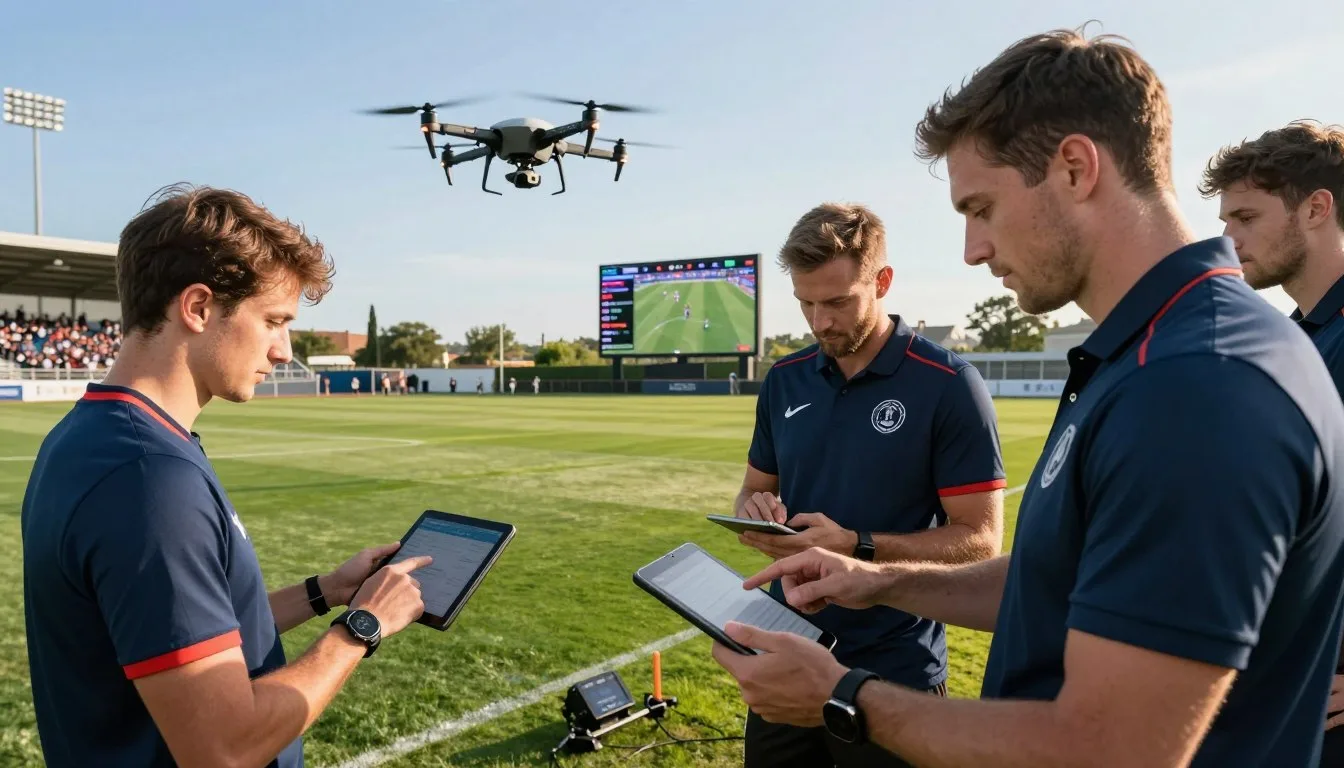
Technology is changing modern sports by giving athletes, officials, fans and sports organizations new ways to measure performance, make decisions and experience competition. In sports, technology now supports training, safety, officiating, business and fan experiences. Its reach matters to anyone who plays, coaches, watches or runs a team.
Wearable technology means non-invasive devices worn on the body that use electronic parts, such as sensors, processors and communication units. These tools can turn movement and other signals into information people can use. Their value depends on how well people interpret that information.
Video systems can help officials review calls, while digital services give fans more ways to follow a game. Organizations also use technology to manage facilities and make business decisions. The best results come from matching a tool to a clear need. Its value is greatest when better information supports, rather than replaces, sound human judgment.
How Technology in Sports Changes Training and Performance
A GPS vest can show how far and how fast an athlete has run, while movement analysis can reveal how that athlete produced the result. These sports technology tools help athletes and coaches connect training with performance. Useful feedback starts with knowing what each reading measures.
Wearable technology uses body-worn electronic devices, including sensors, processors, communication units, actuators and power sources. A 2023 review found 2,568 English-language papers on sports wearables published from 2015 through 2023 in the Web of Science databases it searched. The [wearable technology review] discusses their uses and limits.
Wearables and movement data
GPS vests record sprints, speed and distance during practice. Other wearables can track heart rate, sleep and training load. Those measures give coaches a picture of effort and recovery, not a full account of an athlete’s condition.
Motion capture uses cameras and sensors to assess how a player moves. Force plates measure ground reaction forces, the forces a surface sends back when an athlete pushes against it. Electromyography, or EMG, tracks muscle activation during a movement.
AI, analytics and virtual practice
AI and data analytics can help coaches review training records and video. Machine learning can spot patterns across many clips or sessions, but staff still need to judge whether those patterns matter. Virtual reality (VR) lets athletes rehearse game-like decisions in a simulated setting.
- Workload and distance
- Heart rate and recovery
- Movement technique and alignment
- Video and game-situation analysis
These categories can guide a conversation about training goals. A sprinter may care about repeated speed, while a basketball coach may study movement before a jump. The same tool can answer different questions across sports.
A measurement can inform coaching, but it cannot guarantee better performance.
Some devices miss movement or record a signal poorly, so a clean-looking chart may still mislead. Coaches should compare device readings with what they observe in practice before changing an athlete’s workload.
Can Sports Technology Help Prevent Injuries Without Overtraining?
Monitoring training load can help coaches notice fatigue, but no sensor can replace rest or make an injury impossible. Injury prevention works best when teams use workload signals as one part of a wider safety plan. A device cannot predict every injury or replace medical assessment.
Coaches can adjust a session when an athlete shows signs of unusual fatigue. A sudden change in effort or recovery may prompt a check-in, not a diagnosis. Pain, illness or a possible injury calls for an appropriate health assessment.
Youth participation is rising: 55% of U.S. youth played organized sports in 2023, up from 54% in 2022. In 2024, 65% of U.S. youth ages 6-17 tried sports at least once, compared with 59% in 2021. That year, 6% more children in that age group played a team sport at least once than in 2023.
In 2024, 65% of Latino youth ages 6-17 tried sports in the previous 12 months. Flag football participation among children ages 6-17 grew 14% from 2019 to 2024. Yet about 70% of U.S. children quit organized sports by age 13, with lost enjoyment and the professionalization of youth sports among the contributing factors.
A 14-year-old can start a sport; age alone is not a barrier. Goals, current skill and team eligibility rules shape the available options. The American Academy of Pediatrics recommends one rest day each week and 2-3 months away from each specific sport per year for young athletes.
Year-round focus on one sport can leave young athletes without enough time away. For young athletes, keep at least one weekly rest day and schedule time away from each specific sport during the year.
How Does Technology Support Fair Officiating?
At the 2026 World Cup, VAR checks defined incident categories, but the center referee remains responsible for the final decision. Video assistant referee (VAR) uses video and tracking to help officials check calls. It is a review aid, not a replacement for the referee.
An automatic check and a formal review are different steps. VAR can check an incident without stopping play, then alert the referee to a possible clear error or serious missed incident. The center referee must officially request a review to change an on-field decision.
What VAR can review
At the 2026 World Cup, VAR automatically checks possible goals, penalties, red cards and mistaken identity. It can also review a clearly incorrect second yellow card, plus mistaken identity involving yellow cards or red cards.
Some competitions allow a review of a clearly incorrect corner-kick decision, but only when the restart has not been delayed. VAR checks [for a clear and obvious error] or a serious missed incident. It does not review every close call.
How tracking supports offside decisions
VAR can use video from all broadcast cameras and 16 optical tracking cameras. AI-powered 3D player avatars help show player positions. Advanced Semi-Automated Offside Technology sends positional information to referees and creates broadcast images that show whether a player was offside.
The tracking system can help officials judge a tight position, while an on-screen image helps viewers understand the call. The referee still applies the rules and makes the official decision. A clear graphic can explain the evidence without turning the decision into an automatic ruling.
Officials must weigh the video in context, since the timing and view of a play can affect what the footage shows. A corner-kick review is possible only in competitions that permit it and only if the restart has not been delayed.
How Are Stadiums and Broadcasts Changing Fan Experiences?
Technology can make a live event more interactive, while digital content gives fans another way to connect with athletes and teams. Broadcasts, phones and stadium systems create different ways to follow a game. Each feature changes the experience in its own way.
Broadcast overlays can add scores or play graphics to the screen. Alternate camera views let viewers choose another angle, while virtual reality (VR) can place a remote viewer in a simulated event setting. Connected stadium services can help visitors navigate or use venue features.
- Augmented reality play graphics
- Multiple viewing angles
- Athlete-created digital content
- Connected stadium services
In 2025, 18% of Gen Z respondents said they had attended a live sporting event in the previous year, while 33% said they did not watch live sports on TV. In 2023, a University of Nebraska women’s volleyball game drew 92,003 fans, a record for a female sporting event.
In 2023, 63% of Gen Z respondents said content from favorite athletes increased their sports engagement, compared with 42% of non-Gen Z respondents. These figures describe attendance, television viewing and athlete content separately. Smart stadiums made up 54.6% of the global sports technology market by type in 2025.
An immersive feature adds value only when it helps fans follow the event rather than distracts from the action.
What Is Driving Growth in the Sports Tech Industry?
The U.S. sports technology market reached USD 8.40 billion in 2025, while patent, trademark and design activity shows innovation across several sports. The market reflects demand for tools across the sports industry. Innovation also appears in formal filings.
The U.S. made up roughly 25.6% of global sports technology market sales in 2025. Europe held 30.1% of global revenue that year, while the U.S. held the largest market share by country. Soccer accounted for 15.5% of the market by sport.
Patent filings, trademark registrations and design filings measure different kinds of activity. From 2016 to 2025, sports-related patent filings grew at an annual compound rate of 7.6%, compared with 4.4% for all patent filings. These figures show filing growth, not whether a product works well.
Sports-related trademark registrations grew 6.1% per year from 2016 to 2025, compared with 3.4% for trademarks overall. Sports design filings grew 8.3% per year, while designs across all sectors grew 4.0%. Each measure points to a different part of the sports technology market.
Over the last decade, published patent applications included 65,700 sports inventions. The same period saw 1.25 million sports trademarks registered and 70,300 sports designs registered. These totals show broad activity, not a count of successful products.
Five representative technology categories are:
- Wearables
- AI and data analytics
- VR and augmented reality (AR)
- Tracking for officiating
- Smart stadium systems
Golf, swimming and racket sports had the most sports patents. Patent activity offers one measurable view of which sports draw technical development. Patent activity can identify areas of technical development, but it does not rank which sport requires the most skill.
What Are the Limits of Sports Technology?
A device can collect detailed performance data without guaranteeing that the data is accurate, affordable or handled appropriately. Wearables and other tools may help athletes, but their limits matter. More data is not always better. Privacy, accuracy and cost can restrict their value.
A 2023 academic review identifies privacy, accuracy and cost as limits of wearable technology in sports. Biometric and movement records can reveal sensitive details about an athlete. A reading can also be wrong because of device fit, motion or gaps in the data.
Advanced equipment may cost too much for a smaller school or community team. That can widen access gaps between well-funded organizations and those with fewer resources. A phone-based tool may be easier to use, but it still needs reliable data and staff who can read the results.
Machine learning depends on the quality of its input data. Incomplete records can lead to misleading results, even when the system processes them quickly. Teams should not treat a readiness score or risk estimate as a diagnosis or an automatic reason to bench an athlete.
Organizations need clear consent and data rules. Athletes should know what information a device collects, who can access stored records and how staff may use them. Coaches and medical staff should retain human judgment in high-stakes choices.
Before collecting biometric data, agree on who can access it, how it will be used and when it will be deleted.
How Can Sports Organizations Adopt Technology Responsibly?
A sports organization should choose a technology only after naming the decision it is meant to improve. A clear purpose can keep a team from buying tools for their own sake. Staff need the skills to judge and manage the information a tool creates.
BeOne Sports offers smartphone-based athlete feedback using mobile motion-capture AI and data analytics. It partnered with Rice University on sports medicine and rehabilitation programs. This example shows one way a phone can support feedback, not a guaranteed result or an endorsement.
A 2022 prospective study drew on 92 subject-matter experts from 30 countries. The experts projected that technology would significantly affect athletes, consumers and managers by 2030. Organizations need people who can assess tools and adapt their work as those changes develop.
Before adopting a tool, teams can work through four questions:
- What decision will the tool improve?
- Is its data accurate enough for that decision?
- How will it fit current staff and systems?
- How will access and data use be governed?
The answers can reveal whether a system fits the team’s real needs. A tool that staff cannot operate or connect with current systems may add work without improving a decision. A small test can reveal problems before a wider rollout.
Organizations need staff who can judge the tool’s information and manage its effects on daily work.
Start with a limited pilot and keep the tool only if it produces useful information that staff can act on.
Conclusion
The best sports technology is the tool that helps people make a better decision without obscuring the human work around the game. It should answer a clear need for athletes, coaches, fans or organizations. Good use depends on accuracy, fair access and respect for personal data.
Technology can support performance and improve how people experience sports, but cost and privacy still shape who benefits. Athletes and coaches can begin with one training question and test it using data they already have. Organizations can start with a small pilot and judge its practical effects.
Choose one measurable need, test a focused solution and review its effects before expanding it.