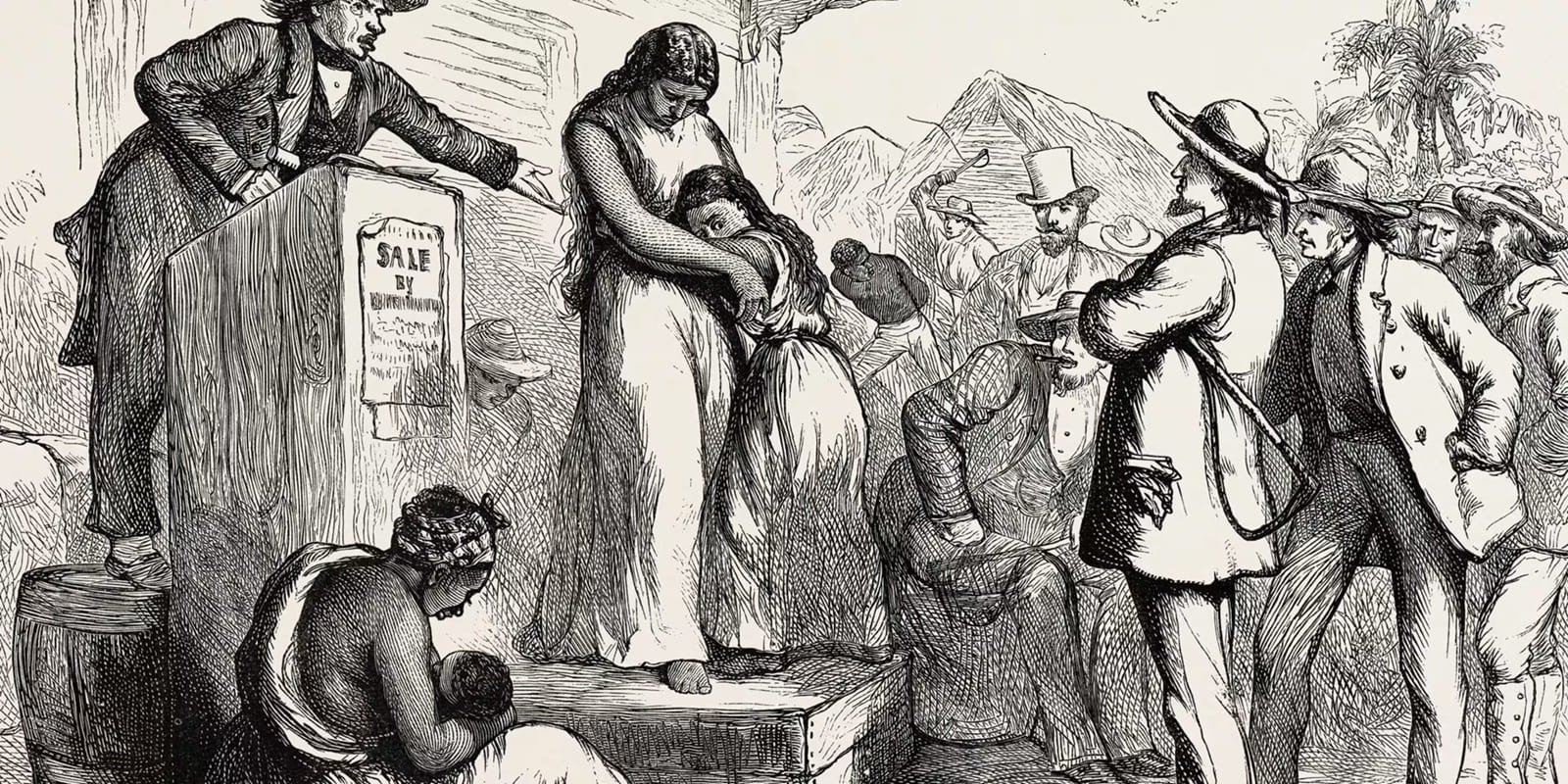
Slavery is one of the most significant and painful chapters in human history. For thousands of years, societies across different regions used systems of forced labour and human exploitation. Millions of people were deprived of their freedom, separated from their families, and treated as property. Although slavery took different forms in different periods, its consequences shaped economies, political systems, cultures, and relationships between communities.
The history of slavery is not limited to one country or period. It includes ancient civilizations, medieval trading networks, the transatlantic slave trade, colonial expansion, abolition movements, and the continuing struggle against modern forms of exploitation. Understanding this history helps explain how inequality developed and why its effects remain visible today.
This guide explores the origins of slavery, the expansion of the international slave trade, the experiences and resistance of enslaved people, the movement toward abolition, and the lasting impact on societies around the world.
What Is Slavery?
Slavery is a system in which one person is deprived of freedom and controlled by another person, institution, or authority. Enslaved individuals may be forced to work, prevented from leaving, separated from their families, and denied control over important aspects of their lives.
Historically, enslaved people were often treated as property that could be bought, sold, inherited, or transferred. Their labour was used in agriculture, mining, construction, domestic service, manufacturing, and other economic activities.
Slavery was not always organized in the same way. Some historical societies enslaved prisoners of war, people unable to repay debts, or individuals captured through raids. Other systems developed into hereditary institutions in which children inherited an enslaved status from their parents.
A particularly destructive feature of many later systems was the denial of basic human rights across generations. Enslavement became deeply connected to economic interests, social hierarchy, political power, and, in some regions, racial discrimination.
The Origins of Slavery in Ancient Civilizations
Early Forms of Enslavement
Slavery existed in several ancient societies long before the development of the transatlantic slave trade. Historical evidence indicates that forms of human enslavement were practiced in parts of Mesopotamia, ancient Egypt, Greece, Rome, and other regions.
In early civilizations, people could become enslaved through warfare, kidnapping, debt, punishment, or inherited status. Their responsibilities varied according to the society and period in which they lived.
Some enslaved people performed agricultural labour, while others worked in households, workshops, mines, or large construction projects. Their conditions were not identical, but they generally had limited freedom and were subject to the authority of those who controlled them.
Slavery in Ancient Greece and Rome
In ancient Greece, enslaved people worked in households, agricultural settings, workshops, and mines. Their legal and social positions differed between city-states. In some places, enslaved workers were essential to the economy and daily activities of free citizens.
The Roman Empire also relied extensively on enslaved labour. Conquests brought large numbers of captives into Roman territories, where they were employed in agriculture, domestic service, construction, mining, and administration.
Some enslaved individuals were able to gain freedom through manumission, but this possibility did not remove the wider inequality of the system. Slavery remained a major part of Roman society and economic life.
The Expansion of Slavery Across Regions
Slavery was not confined to Europe or the ancient Mediterranean. Different systems of enslavement existed across Africa, Asia, the Middle East, and other parts of the world.
Trans-Saharan, Red Sea and Indian Ocean Trade
For many centuries, trading networks connected different parts of Africa with North Africa, the Middle East, and Asia. These routes carried goods, ideas, and people, including individuals who were captured or sold into slavery.
The trans-Saharan trade crossed desert routes connecting sub-Saharan Africa with North African markets. Other networks operated through the Red Sea and Indian Ocean, linking East Africa with destinations in the Middle East and parts of Asia.
These systems changed over time and involved different political authorities, merchants, and communities. They also had serious human consequences, including family separation, forced migration, and exploitation.
It is important to recognize these histories alongside the better-known transatlantic trade to understand the wider global history of slavery.
The Transatlantic Slave Trade
How the Atlantic Slave Trade Began
The transatlantic slave trade expanded from the fifteenth century as European maritime powers developed trading and colonial networks along the African coast and across the Atlantic.
Portuguese merchants were among the earliest European participants in this developing trade. Spanish, British, French, Dutch, and other commercial interests later became involved.
European colonization of the Americas created a growing demand for labour, particularly on plantations producing sugar, tobacco, coffee, and cotton. Enslaved Africans were forcibly transported across the Atlantic to meet this demand.
Over several centuries, the trade became an international system involving merchants, shipowners, plantation owners, financial institutions, and colonial governments.
The Middle Passage
The Middle Passage refers to the forced Atlantic voyage that carried enslaved Africans from the coast of Africa to the Americas.
People were confined in overcrowded ships under extremely dangerous conditions. They faced disease, hunger, dehydration, violence, and severe psychological distress. Many died during the journey, while survivors were sold into slavery after reaching the Americas.
The Middle Passage was not simply a journey between continents. It was a central part of a commercial system that treated human beings as cargo and denied them their freedom and dignity.
Plantation Slavery in the Americas
After arriving in the Americas, enslaved Africans were forced to work in plantations, mines, households, ports, and other workplaces.
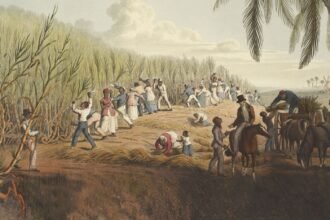
Plantation economies depended heavily on forced labour. Sugar production in the Caribbean and Brazil, cotton cultivation in the southern United States, and tobacco production in several colonies generated substantial wealth for plantation owners and trading interests.
Enslaved people often worked long hours under harsh supervision. They could be physically punished, separated from relatives, and sold to different owners. Laws in many colonies restricted their movement, education, family rights, and ability to own property.
Despite these conditions, enslaved communities maintained cultural traditions, built relationships, shared knowledge, and developed ways to protect their identities.
The Human Impact of Slavery
Family Separation and Loss of Freedom
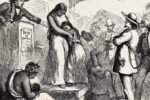
One of the most devastating consequences of slavery was the destruction of family stability. Enslaved individuals could be sold or transferred without regard for their relationships with parents, children, spouses, or other relatives.
Families were separated across plantations, towns, and even continents. Many people spent years searching for missing relatives, while others never had the opportunity to reunite.
The denial of personal freedom also affected people’s ability to make decisions about their work, education, religion, relationships, and future.
Cultural Disruption and Identity
The forced movement of millions of Africans disrupted communities and cultural networks across the continent. People were separated from their languages, traditions, religious practices, and familiar environments.
However, enslaved communities did not simply lose their cultural identities. They preserved and adapted traditions through music, storytelling, food, language, spiritual practices, and community relationships.
African cultural influences became an important part of societies throughout the Caribbean, North America, and South America. These contributions remain visible in art, literature, music, cuisine, and religious traditions.
Resistance Against Slavery
Everyday Acts of Resistance
Resistance was an essential part of the history of slavery. Enslaved people challenged their conditions in many ways, including preserving cultural practices, slowing work, escaping, protecting family members, and refusing to accept the authority imposed upon them.
These actions demonstrated that enslaved individuals were not passive participants in history. They made decisions, protected their communities, and continually sought freedom.
Rebellions and Organized Movements
Some resistance developed into organized uprisings and military struggles. The Haitian Revolution, which began in 1791, became one of the most important events in the history of emancipation.
Enslaved and formerly enslaved people in the French colony of Saint-Domingue fought against slavery and colonial rule. Their struggle led to Haiti’s independence in 1804 and the establishment of the first independent Black republic.
Other revolts and resistance movements occurred throughout the Caribbean, Latin America, and North America. These movements challenged the political and economic systems that depended on forced labour.
The Abolition of Slavery
The Growth of Abolition Movements
Opposition to slavery developed over many generations. Enslaved people themselves played a central role in challenging the institution, while religious groups, writers, political reformers, and organized campaigners also contributed to abolition movements.
Formerly enslaved individuals shared personal accounts of exploitation and helped expose the realities of the slave trade. Campaigners organized petitions, public meetings, publications, and political pressure to demand change.
Abolition was not achieved through one event or one person’s efforts. It resulted from sustained resistance, political debate, social movements, and changing laws.
Important Abolition Milestones
Several historical developments marked important steps toward ending slavery:
- 1807: Britain passed legislation abolishing its transatlantic slave trade.
- 1833: The British Parliament passed the Slavery Abolition Act, which brought an end to slavery in most British colonies after a transition period.
- 1863: The Emancipation Proclamation declared enslaved people in designated areas of the United States to be free, although its practical reach depended on Union military progress.
- 1865: The Thirteenth Amendment to the United States Constitution abolished slavery, except as punishment for a crime.
- 1886: Slavery was abolished in Cuba.
- 1888: Brazil passed the Golden Law, ending legal slavery in the country.
These dates represent important milestones, but abolition happened differently across regions. Legal changes did not immediately guarantee equal rights, economic independence, or protection from discrimination.
The Lasting Legacy of Slavery
The economic impact of slavery continued long after formal abolition. Enslaved labour generated wealth for plantation owners, merchants, manufacturers, and colonial economies. Meanwhile, enslaved people were denied wages, property ownership, and many opportunities to build financial security.
After emancipation, many formerly enslaved communities faced limited access to land, education, employment, and political participation. Discriminatory laws and social practices continued to restrict opportunities in several countries.
These historical inequalities contributed to economic and social differences that remain important subjects of research and public discussion.
Racism and Discrimination
In the Atlantic world, slavery became closely connected to racial classifications and beliefs that attempted to justify the exploitation of African people.
These ideas helped establish systems of discrimination that continued after slavery was abolished. Racial segregation, unequal access to education, discriminatory employment practices, and other forms of exclusion developed in different societies.
Understanding the relationship between slavery and racism is essential to understanding modern debates about equality, representation, historical responsibility, and human rights.
The legacy of enslaved communities is also reflected in cultural achievements and contributions.
African and African-descended communities have influenced music, literature, dance, food, language, religion, art, and political thought across the world. These contributions helped shape the cultural identities of many modern nations.
Remembering this heritage means recognizing both the suffering caused by slavery and the creativity, resilience, and achievements of people who resisted it.
Modern Slavery and Human Exploitation
Although legal slavery has been abolished in most countries, forced labour and other forms of severe exploitation continue to exist.
Modern slavery is an umbrella term commonly used for situations in which people cannot refuse or leave exploitation because of threats, violence, coercion, deception, or abuse of power.
Examples include human trafficking, forced labour, debt bondage, forced marriage, and certain forms of child exploitation.
People experiencing poverty, displacement, discrimination, or unsafe working conditions can face increased risks. Addressing these problems requires effective laws, responsible businesses, public awareness, victim support, and international cooperation.
Readers can learn more about current efforts to understand the history and consequences of enslavement through UNESCO’s Routes of Enslaved Peoples programme.
Why Understanding the History of Slavery Matters
Studying slavery is important because it helps people understand how systems of exploitation develop and how they influence societies over time.
Historical knowledge also encourages more informed conversations about human rights, equality, racism, economic development, and social responsibility.
Learning about the experiences of enslaved people gives recognition to individuals and communities whose lives were often excluded from traditional historical accounts. It also highlights the importance of resistance, solidarity, and the continued struggle for freedom.
Museums, memorials, archives, educational institutions, and community organizations all contribute to preserving historical records and sharing these stories with future generations.
Conclusion: Remembering the Past and Building a Fairer Future
The history of slavery is a story of exploitation, injustice, resistance, and the long struggle for human freedom. From ancient civilizations to the transatlantic slave trade, systems of enslavement affected millions of people and shaped economies, cultures, and political institutions across the world.
Although abolition brought an end to legal slavery in many countries, its consequences did not disappear. Economic inequality, racial discrimination, cultural disruption, and modern forms of exploitation demonstrate why this history remains relevant.
Remembering slavery is not only about understanding past suffering. It is also about recognizing the courage and contributions of enslaved people, preserving historical truth, and supporting the principles of dignity, equality, and freedom for everyone.