
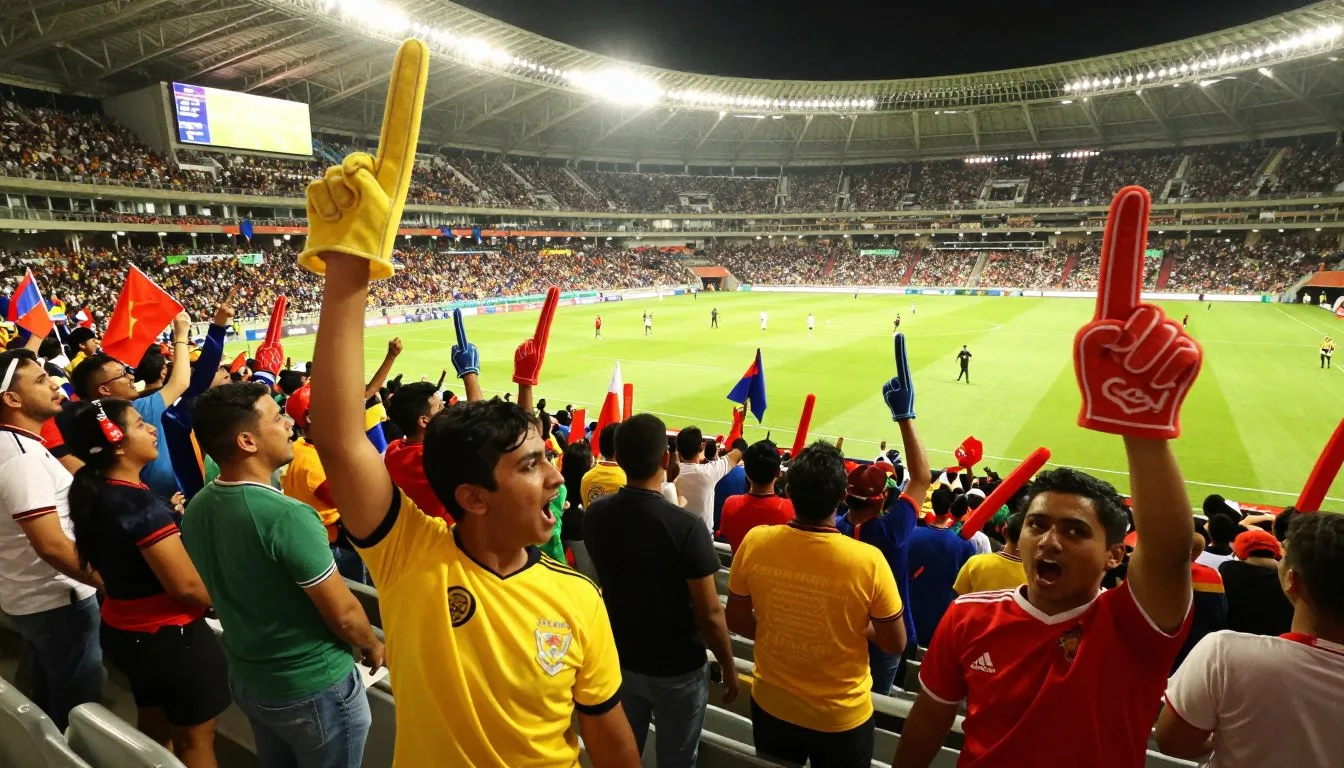
Football has the larger global following, while cricket commands an exceptionally strong audience in its core markets. The debate often turns on what popularity means: fan identity, geographic reach, or event viewing. A fan base is the people who identify as fans of a sport.
Those measures tell different stories. A survey can count people who call themselves fans, while a broadcast report tracks people who watched an event. Neither measure alone explains how widely a sport reaches across the globe.
This comparison separates those measures and explains why the numbers can seem to conflict. It also shows why strong local interest does not always mean that a sport has the widest reach. The data need context before they can support a useful comparison. A meaningful comparison separates the size of a sport’s audience from how widely that audience is spread.
How Does Cricket vs Football Popularity Compare Worldwide?
Football has the larger overall global following, although cricket’s audience also numbers in the billions. In 2025, 51% of people globally identified as football fans. Some measures place cricket’s following above two billion people.
The two estimates do not come from one shared survey. A fan estimate may use a broad definition, while a survey may ask people directly whether they follow a sport. Those methods can produce different totals.
Keep fan estimates, surveyed fandom, and event viewing as separate measures. Combining them creates a total that does not describe one consistent audience.
A cricket vs football popularity graph should show the measure behind each number, not place unlike counts on one scale. A surveyed share describes the people questioned, while a fan estimate may rely on a wider model. Event viewing counts attention during a broadcast or tournament, not everyone who identifies as a fan.
That distinction matters when comparing sports across countries. A person might follow a team but rarely watch live games. Another might watch a major final without calling themselves a regular fan. The 2025 global survey result gives football a clear lead in surveyed fandom, while cricket retains a huge following under other measures. Check what a ranking counts before comparing the numbers it places side by side.
Where Are Cricket and Football Most Popular?
A map of the two sports shows football spread across more regions and cricket strongest in a smaller set of established markets. Reach and local intensity are different things.
Both sports travel well through media, but their strongest traditions sit in different places. Broadcast access can put a match in many countries without making every territory a major fan market.
Football’s audience spans more regions
Football has a broad presence across Europe, Africa, the Americas, and Asia. National teams, local clubs, and international tournaments give people many ways to follow the game.
A 2022 Nielsen report found football ranked among the top three sports in 10 of 13 surveyed countries, and in the top 10 in the other three. Nielsen’s World Football Report reflects those sampled markets, rather than counting every fan on the globe.
Cricket’s strongest following is concentrated
Cricket has especially deep roots in India and the wider South Asian region. Australia, England, and the Caribbean also have long-standing cricket audiences.
India is a central market for the sport, but that does not mean every cricket fan lives there. The Indian Premier League brings teams and players to a large audience, while national tournaments create interest across borders.
The 2023 ICC Men’s Cricket World Cup had 20 broadcast partners across 209 territories. That wide distribution shows where viewers could access the tournament, not how many fans lived in each nation. Treat the number of territories carrying an event as evidence of distribution, not as a count of local fans.
Which Sport Draws More U.S. Viewers?
In the United States, football led the 2025 sports-viewing survey, with American football and soccer measured separately in the detailed results. Football in the general result means American football.
Among surveyed U.S. internet adults, 51% watched football in 2025. The same survey found that 73% watched sports, making football the most-watched sport overall.
The detailed figures use different groups and measures. NFL game viewing refers to U.S. internet adults, while FIFA and MLS results below refer only to U.S. soccer fans.
- Overall sports viewing: 73% watched sports, and 51% watched football in 2025.
- League viewing: 43% watched NFL games in the first-quarter 2025 survey. In the same survey, 31% watched basketball and/or baseball, 29% watched MLB games, and 24% watched NBA games.
- Soccer viewing among U.S. soccer fans: 87% watched FIFA men’s soccer matches, and 55% watched MLS matches in the first-quarter 2025 survey.
These figures answer the question of cricket vs football popularity in the USA only when their survey groups stay clear. They measure sports watched, not the total number of fans or the number of minutes each person watched.
The 2023 Cricket World Cup also received 395 hours of live U.S. coverage, 14% more than in 2019. More broadcast time signals access, but it is not the same as a national audience share. Always identify whether a U.S. figure refers to all internet adults or to soccer fans.
What Do Major Tournament Audiences Reveal?
The 2023 men’s Cricket World Cup combined huge live audiences with substantial streaming and digital viewing. Different screens added to the event’s total attention.
The tournament recorded 1 trillion global live viewing minutes, 38% more than the 2011 edition. Streaming platforms accounted for 177 billion live viewing minutes, and ICC platforms recorded 16.9 billion video views.
The men’s Cricket World Cup drew enormous audiences
The final between India and Australia drew 87.6 billion global live viewing minutes. In India, the final reached a peak television audience of 130 million, with 59 million peak concurrent viewers on Disney+ Hotstar.
The U.S. final drew 48 million live viewing minutes, 47% more than the second-most-watched match, India versus Pakistan. Nine of the 10 most-watched U.S. matches featured India, showing the importance of the Indian team to that tournament’s U.S. audience.
These results belong to a single tournament, not a count of everyone who follows cricket. Virat Kohli is one example of a star player whose name can help audiences connect with a team and event. Big events such as the T20 World Cup can also draw viewers beyond regular league audiences.
Women’s cricket also reached a larger audience
The 2025 Women’s Cricket World Cup delivered 1.5 billion global viewing hours, three times the total of the previous edition. The women’s tournament viewing total shows how much attention a major event can attract.
FIFA World Cup coverage offers another kind of tournament audience, but its viewing totals must use the same units for a fair comparison. Live minutes, viewing hours, peak viewers, and video views do not count the same thing.
A peak audience captures the high point at one time. Viewing hours add up time spent watching, while video views count plays of digital clips. Compare tournament figures only after checking whether they count minutes, hours, peak viewers, or video views.
Why Is Cricket Less Familiar to Many U.S. Viewers?
Cricket’s U.S. familiarity gap is real in one small college-aged sample, but that sample also showed moderate interest in learning and watching. Limited knowledge does not equal rejection.
A 2026 exploratory study of 152 U.S. college-aged participants found limited knowledge of cricket’s rules and star players. The same group showed moderate interest in learning, playing, watching, or attending events.
That study cannot represent all Americans. Still, its results suggest that unfamiliar rules and players may make it harder for new audiences to follow a match. Interest can grow when people have a clear way to learn the game.
Three practical factors shape that first experience:
- Understanding the rules well enough to follow how a match changes.
- Recognizing players, teams, and leagues, including Major League Cricket.
- Having accessible chances to watch a match or try playing.
Cricket can feel unfamiliar when viewers do not know what a batter, bowler, or fielding team is trying to do. A few clear explanations can make the action easier to read, while local chances to play make the rules less abstract.
Major League Cricket is one example of a U.S. professional league. Its presence gives interested viewers another place to encounter the sport. Separate limited familiarity in a particular group from a claim that the whole country has no interest.
How Are Younger Fans Watching Sports?
Young adults can follow sports regularly without watching every full event. Following a team does not require sitting through each match.
Among global consumers ages 18-24, 74% followed sports regularly. The figures do not support a simple claim that young adults are uninterested.
Regular interest does not mean watching every full game
In that global age group, 34% preferred highlights over full events, while 30% watched entire games. Preference and viewing behavior are related, but they are not the same measure.
A person may keep up with a team through scores, player news, and brief clips. That still shows interest, even when a full game does not fit into the day.
Highlights offer a different way to follow
Clips, interviews, and social media let fans follow players without setting aside hours for a live match. Short videos can show a key goal, a close finish, or a strong performance in minutes.
In a separate first-quarter 2025 U.S. survey, 38% of Americans often watched online sports highlights, clips, and interviews. That result covers Americans, not just people ages 18-24, so it is not a direct match with the global youth figures.
Media habits also change what a fan sees. A highlight feed may focus on star players such as Lionel Messi, while a full broadcast shows more of a team’s tactics and slower stretches of play.
One snapshot cannot prove that young people’s sports interest is rising or falling. A decline claim needs comparable measurements across multiple years, with the same questions and audience. Treat following, preferring highlights, and watching an entire game as three different measures.
How Do the Sports Differ on the Field and in Their Formats?
A soccer match fits into 90 minutes, while cricket can ask viewers to choose between a short T20 game and a Test lasting several days. Time is one clear difference.
T20 cricket typically lasts about three hours, while Test cricket can last up to five days. Soccer offers a set match length; cricket’s time commitment depends on its format.
The equipment and place of play also differ. Football can be played with a ball and open space, while cricket needs a bat, ball, protective pads, and a prepared pitch.
Cricket has three main formats:
- Test: a long match that can last up to five days.
- One-day international: a limited-overs match played in one day.
- T20: a shorter format that typically lasts about three hours.
These formats vary in match length and structure, so one cricket game may feel very different from another. The skills also differ by role: batters, bowlers, and fielders face distinct tasks, while soccer players move the ball with their feet.
Neither sport is objectively harder for every player. The demands change with the format, role, and skill being tested.
A casual game of football needs little gear, while cricket asks players to prepare a pitch and protective equipment. Those differences shape where people can play and how much time a match takes. Choose a format by the time available and the kind of play you want to follow.
Conclusion
Football leads on global reach, while cricket’s concentrated strongholds give it exceptional depth. Football has the wider global following, while cricket is a billion-fan sport with deep roots in South Asia and other established markets.
Popularity depends on what a ranking counts. Fan identity, viewing, and geographic spread each answer a different question about sports and their audiences.
When a new ranking appears, check its measure before comparing the numbers. A fan survey cannot be read as a tournament audience, and a broadcast footprint cannot stand for local fan totals. Check the metric behind the next popularity ranking before deciding what its numbers mean.